September 15, 2026
At twenty past four on a May morning there is nothing much to see. The garden is grey, the street lights are still on, and then a robin starts somewhere near the hedge — thin, clear, unhurried. A song thrush answers from two gardens away, repeating each phrase two or three times. Within twenty minutes blackbirds, wrens and great tits have joined in, and the whole street sounds like somewhere else entirely. That concentrated burst, arriving in the hour around sunrise, is the dawn chorus.
It is the loudest and busiest moment of the British birdwatching year, and it is free. It also rewards a little knowledge, because the chorus is not one thing. It is a sequence, and every part of it happens for its own reasons.
What the dawn chorus actually is
"Dawn chorus" is useful shorthand rather than a single event. What you hear is a rolling set of entrances and exits: a handful of early singers, a build towards sunrise, a peak just after it, then a gradual thinning out. In Britain the full cast is largest from about late April to early June, when resident birds are firmly on territory and the summer migrants have arrived.
Winter has a chorus of sorts. Robins and song thrushes will sing before first light in January, and on a mild, still morning you may hear four or five species. But it is sparse, and the line-up changes as the weeks pass. Almost all of the singing is male, and almost all of the singers are songbirds — the passerines. Two messages go out at once: this patch is taken, and I am here, and fit enough to hold it. Females listening in are weighing up exactly that.
Why sing at first light?
Several advantages stack up at the same time, which is why the behaviour is so widespread among unrelated species.
- Territories need restating. Overnight, boundaries blur and rivals move about. A burst of song at first light tells neighbours and wanderers where the lines are, before the day's business begins.
- Mates are listening. Unmated males tend to sing earlier, longer and harder than paired ones. The long-standing interpretation of the early shift is that it is aimed at females — and paired males sing partly to keep rivals away from a partner at the point in the breeding cycle when she is most likely to be fertile.
- Food is not yet worth chasing. Before the sun warms the air, insect prey is cold and inactive, so hunting is poor value. A bird that cannot feed efficiently may as well sing.
- Light is on the singer's side. Songbirds see well in low light, and the earliest singers tend to be species with relatively large eyes — robins, thrushes — which can move about and spot rivals before smaller-eyed birds could manage. It is one of the more persuasive explanations for the running order.
- The air is on the singer's side too. Which is worth a section of its own.
The acoustics of a still morning
Sound carries further
At dawn, the ground is often colder than the layer of air just above it. That arrangement bends sound waves back down towards the earth instead of letting them drift upwards, so a song travels further before it fades. Wind is usually at its lightest at this hour as well, so the message arrives intact rather than shredded.
Less to compete with
Traffic has not started. Nor have deliveries, mowers, strimmers or the general rumble of the working day. Leaves are still, so there is no rustle to swallow the higher notes, and there are far fewer aircraft overhead. A blackbird at 5am is broadcasting into a near-empty room.
In towns, artificial light and noise can shift the pattern. Some robins sing through the night under street lighting, and urban birds sometimes start earlier than their countryside neighbours. That is a change in timing, not in the song.
Why it fades by mid-morning
Three things happen at once. The light improves, insects stir, and feeding finally becomes worth the effort. Adults with nestlings have a demanding job, and singing does not fill a brood. Meanwhile the air begins to mix and move, background noise rises, and song carries far less well. There is also a cost to performing: a bird perched in the open and broadcasting is conspicuous to sparrowhawks and cats. Dawn offers the best return for the risk; the rest of the day has other priorities.
The habit does not switch off completely. There is often a smaller dusk chorus in the hour before sunset, and individual birds sing at odd moments through the day — usually a short, half-hearted version of the real thing.
A rough running order
Species join in a loose sequence. It varies with weather, habitat and how far north you are, but it is consistent enough to be useful.
- Robin. Frequently first, sometimes singing a good hour before sunrise, and the species most likely to be heard in the middle of the night.
- Song thrush. Often close behind. Listen for short phrases repeated two or three times — it is the most distinctive delivery of any British songster.
- Blackbird. Lower and more relaxed, fluting phrases that often tail off at the end. Usually starts while the sky is still dark blue.
- Wren and dunnock. As light creeps in. The wren's song is startlingly loud for a bird the size of a golf ball.
- Great tit, blue tit, coal tit. The great tit's ringing two-note phrase, often written down as "tea-cher, tea-cher", is a reliable marker that the peak is near.
- Migrants: blackcap, chiffchaff, whitethroat, garden warbler. Generally later, needing better light to work a hedge.
- Wood pigeon, collared dove, goldfinch. The coda rather than the chorus — the sound of the morning getting on with itself.
How to listen more attentively
Nothing here needs equipment, but a little method makes an enormous difference.
- Check sunrise time the night before and be in position 45 to 60 minutes before it. The best listening is before sunrise, not after.
- Stand still. Ten minutes of complete stillness will produce more birds than twenty minutes of walking.
- Choose a place with structure: a hedgerow, a woodland edge, a mature park, a cemetery with old trees. A bare field or an exposed hilltop will be quiet.
- Learn three songs properly rather than twenty vaguely. Robin, blackbird and great tit will carry you a long way.
- Follow one bird at a time. Pick a song out of the wall of sound and stay with it until it stops; then move on.
- Cup your hands behind your ears and angle them towards the sound. It is a crude trick, but it genuinely helps you pick out a single voice.
- Record a minute on your phone and play it back later. Hearing it again, away from the pressure of the moment, slows everything down.
- Note the first song you hear each morning and the time you heard it. Over a spring, the dates shift and the pattern begins to make sense.
- If you can choose your morning, pick one that is still, dry and slightly overcast. Clear, cold and breezy mornings are usually much quieter.
Start with one morning
Pick a date in late April or early May, set an alarm, and be outside half an hour before sunrise. Stand near a hedge, keep still, and listen for the first voice. Then wait for the second. Write down what you hear and the time you heard it, and do the same again a few days later.
After three or four mornings, you will start to recognise the regulars by ear and notice the gaps when a bird has moved on. No binoculars are needed at that hour, and no app will do the listening for you. Just a coat, a quiet spot and the patience to stand still for a quarter of an hour. Many people find it a genuinely calming way to begin the day — and the dawn chorus, once you can read it, is one of the best free spectacles the British countryside offers.
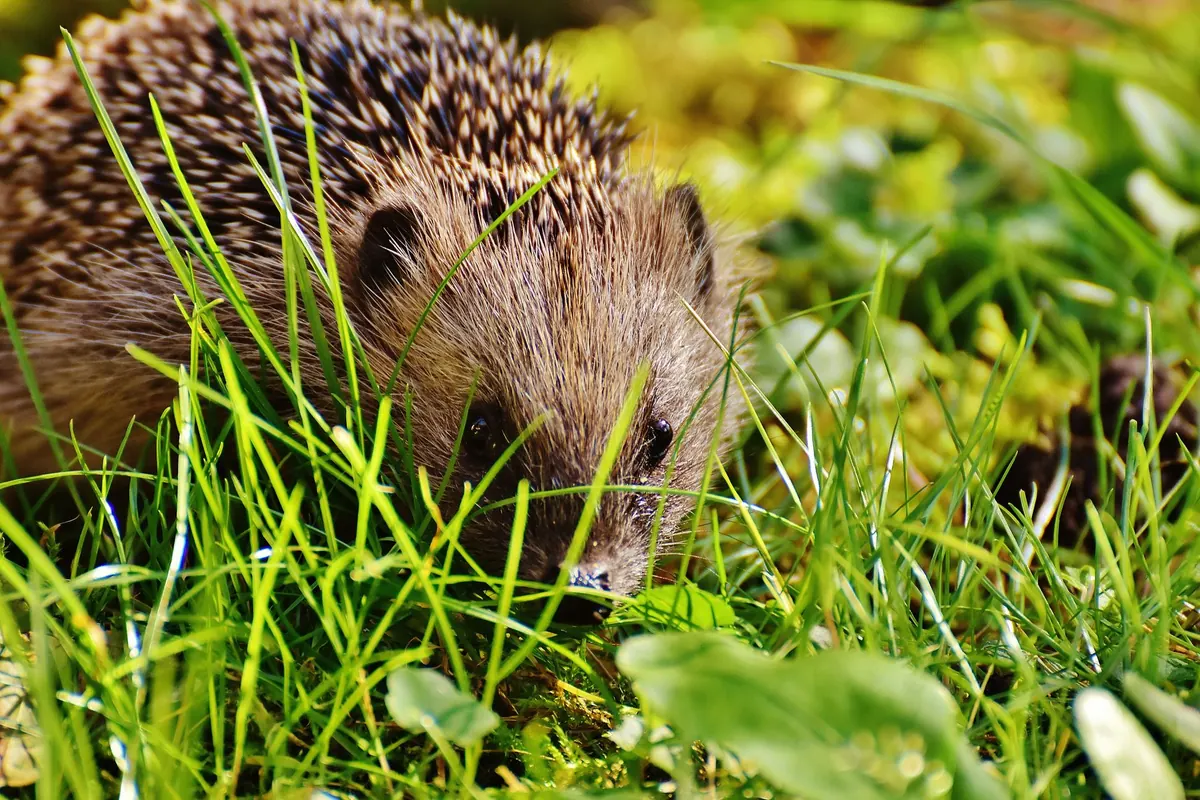
Photo: jplenio / Pixabay